
The Myth of the 5 Stages of Grief
I co-led a grief retreat not long ago. Twenty people in a room, each of them carrying something heavy (and not all of it was death). Loss of a marriage. Loss of a career. Loss of a version of themselves they thought they’d always be. Loss of a child. Loss of a future that was supposed to happen and just... didn't.
What struck me, sitting in that room, was how everywhere grief is. How many people are walking around carrying it quietly, certain that they are somehow doing it wrong, or taking too long, or feeling too much, or not enough.

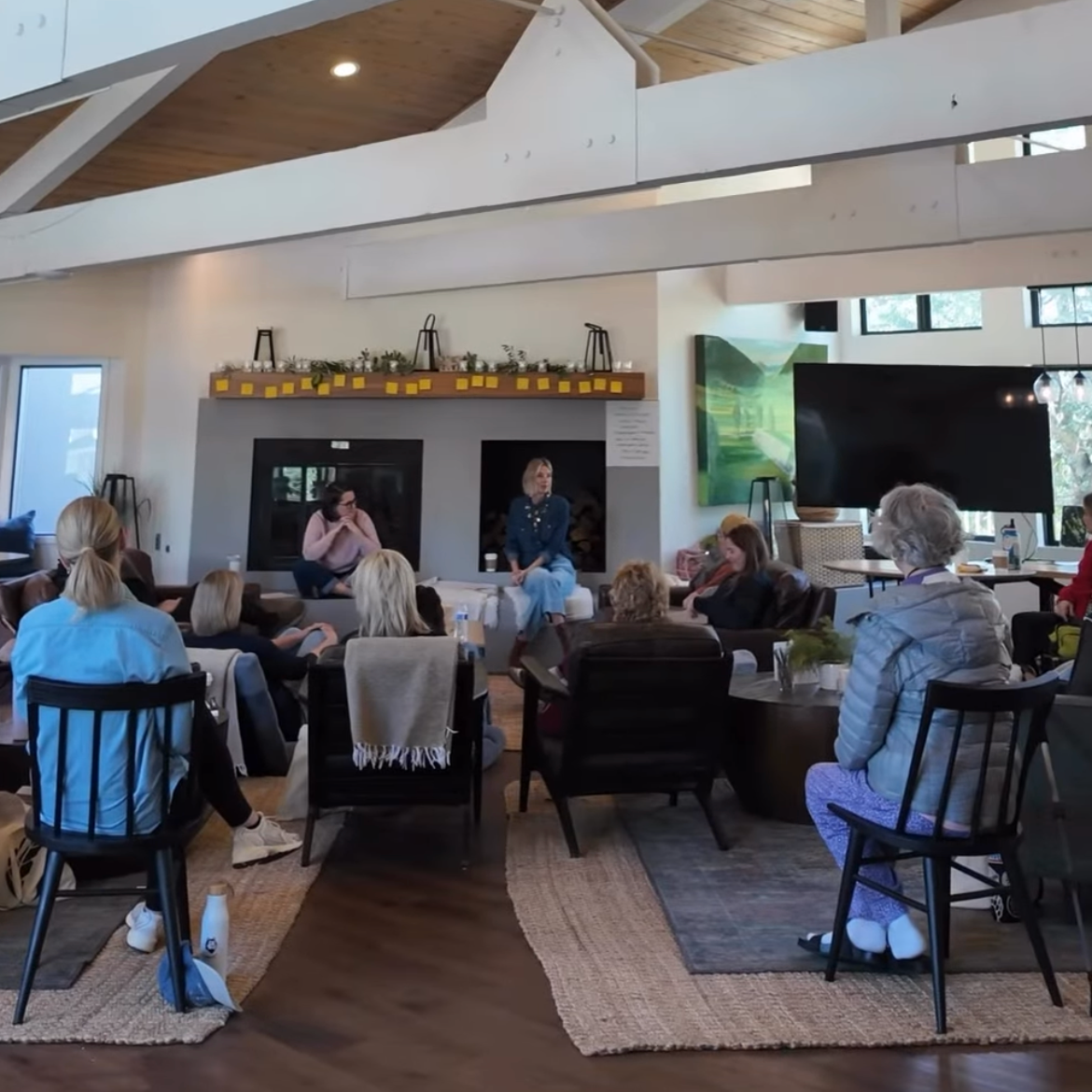
A lot of that, I think, comes back to a map someone handed us a long time ago.
Denial. Anger. Bargaining. Depression. Acceptance.
Like if we just followed the trail markers, we'd eventually come out the other side of the forest into some kind of clearing called okay.
Here's what nobody told us: the map was never drawn for us. Or for you. It wasn't even drawn for people who were grieving the loss of someone they loved.
Elisabeth Kübler-Ross was a Swiss-American psychiatrist who spent the 1960s doing something radical for its time — she sat with dying people and asked them what it was actually like. Medicine didn't do that then. Death was a taboo, something that happened to patients while the doctors looked away and filled out paperwork. Kübler-Ross looked directly at it.
In 1969, she published On Death and Dying, and in it she described five patterns she noticed in terminally ill people coming to terms with their own deaths. Not grief. Not loss. Their own mortality. She was mapping the interior experience of people who had just been told their time was running out.
Here's what she saw:
Denial — "The tests must be wrong. This cannot be happening." The mind's way of absorbing the unabsorbable slowly, at a pace it can actually handle.
Anger — "Why me? I did everything right. This isn't fair." Once reality starts seeping in, it has to go somewhere. It goes sideways. It gets aimed at the doctor, at God, at the perfectly healthy stranger in the waiting room who gets to just go home.
Bargaining — "Just let me make it to her wedding. Give me one more year." Magical thinking. Desperate negotiating with fate or God or whatever might be listening, searching for some loophole out of the unbearable.
Depression — Not clinical depression, but a deep, heavy settling. The weight of what's coming is becoming undeniable. Withdrawal. Quiet. The bone-tired ache of knowing.
Acceptance — Not happiness. Not relief. Just a quiet, hard-won peace with what is. This is real. I don't want it to be true. But it is.
These are real, human, recognizable responses. Kübler-Ross captured something true.
The problem isn't the map.
The problem is the weather.
Somewhere between 1969 and now, those five stages got lifted off the page and pressed onto every human experience of loss imaginable. Grief, divorce, job loss, miscarriage, the end of a friendship, apparently even corporate restructuring. And in that copy-paste, something important got lost: Kübler-Ross never said these stages were linear. She never said you'd hit all of them. She never said reaching acceptance meant you were finished, or that skipping bargaining meant you were broken.
But that's not how it got handed down. What stuck was the checklist.
And here's what a checklist can't account for: the weather you're walking through that forest in is entirely your own.
Two people can lose a parent in the same month and be standing in completely different storms. One of them has a therapist, a partner who shows up, a faith that holds. The other is doing it alone, on no sleep, with a childhood that taught them grief was something you swallowed quietly and got over. Same loss. Same forest. Completely different experience of moving through it.
Your attachment style is weather. Your history with loss is weather. Your support system, your financial stress, your relationship with the person or the thing that you lost? All of it is weather. And none of it shows up on the map.
Research has started to catch up to what grieving people have known all along. George Bonanno, a psychologist at Columbia, spent decades studying how people actually move through loss and found that the most common response is resilience (FANTASTIC!). Not stages, not a predictable arc, not five chapters with a beginning and an end. Most people, given time and support, find their footing. But the path looks different for every single one of them.
So if the map doesn't account for the weather, what does?
Here's what I noticed in that room of twenty people, and what I keep coming back to:
Grief is felt in the body. It is not a thought experiment. It is not something that happens only in your mind while the rest of you goes on normally. Grief lives in the chest and the throat and the stomach. It shows up as exhaustion, as changes in appetite, as that strange physical heaviness that makes even small tasks feel enormous. Which means that if we want to navigate our own weather, we have to take care of the equipment we're feeling it with.
It’s hard to grieve when sleep is scarce, when your nervous system is running on fumes, when you're overworked and haven't moved your body in days. This isn't about toxic positivity or wellness routines. It's simpler and more urgent than that. Movement, sleep, nervous system regulation…these are not luxuries. They are the bare minimum infrastructure for being able to feel what you need to feel without being completely leveled by it.
Grief is metabolically expensive. Here's something that stopped me when I first really understood it: your brain is always trying to close a loop. It is always reaching for what is familiar, what is known, what has always been there. And when someone dies, when something you loved and counted on is simply gone, that loop cannot close. Not on what was. Your brain keeps reaching and finding nothing, over and over, in a thousand small moments every day. The coffee mug. The side of the bed. The habit of picking up the phone to call them.
Creating a new story, a new normal, a new sense of who you are in the absence of what you lost, is some of the hardest cognitive work a human being can do. It is genuinely, biologically expensive. So if you are tired in a way that sleep doesn't seem to fix, if your thinking feels slow and foggy, if you feel like you're running a marathon you never signed up for: you are. Be patient with yourself. Your brain is doing something enormous.
We do not grieve in a vacuum. Loss lands differently on every person it touches, even when it's the same loss. A couple who loses a child together can find themselves grieving in ways that feel utterly foreign to each other. One needing to talk about it constantly, the other goes silent. One finds comfort in ritual and memory, the other needs to move forward just to survive. Neither of them is wrong. Both of them are in the same forest in completely different weather, reaching for each other across a storm neither one of them can fully see.
This is one of the loneliest parts of grief that no one talks about enough. The people closest to you, the ones who loved what you loved, are also deep in their own storm. They cannot always be your shelter. Sometimes you need to find others. A grief group, a therapist, a retreat room full of twenty strangers who all understand something essential about what you're carrying, to help hold what the people closest to you simply don't have the capacity to hold right now.
What worries me about handing someone the five stages when they're in the thick of it is what it quietly asks them to do: measure themselves against it.
Am I in denial? Should I be angrier by now? I think I skipped bargaining. Why am I still not at acceptance?
Grief doesn't need more judgment. It already feels like too much. The last thing any of us needs when we're standing in the middle of the storm is someone handing us a map and asking why we're not further along the trail.
Kübler-Ross gave us something real. She cracked open a conversation about death that medicine had been avoiding for too long, and she did it with courage and genuine compassion. The map she drew was honest. It was just never meant to be your map.
Because your grief is yours. Completely and entirely yours. The forest might look familiar. But the weather you're walking through it in? That belongs only to you.
Take care of your body. Be patient with your brain. Let the people who love you be in their own storm without asking them to fix yours. And find the ones who can stand in the rain with you without needing it to stop.
You're not behind. You're not lost. You're not doing it wrong.
You're just in your own weather.
About the author
I'm Morgan Motsinger. I hold a BS in Psychology with a minor in Neuroscience from Portland State University, and I host P.S. We Expire, a podcast about grief, death, and what it takes to live well anyway. I also spent fourteen years caring for my daughter Anni, who died in 2022 (MPSIIIa). I write about grief from both sides of that — what the research says, and what it's actually like inside. Nothing here is medical advice, and I'm not a clinician. It's the explanation I wish someone had handed me.